
Why network automation projects stall, and the 7 fixes
Network automation projects rarely fail outright. They stall, quietly, around month six. The seven patterns behind it, how to detect each one from the platform itself, and the fix.
Read more →Engineering notes and operations writing from the people building NetStacks: what shipped, why it works the way it does, and the network problems it was built around.
Subscribe via RSSNetwork automation projects rarely fail outright. They stall, quietly, around month six. The seven patterns behind it, how to detect each one from the platform itself, and the fix.
Read more →How to put every NSO package change through git, a netsim build, a RESTCONF test, and a native dry-run diff on the merge request. GitLab CI, but the shape works anywhere.
Read more →A safe, repeatable procedure for the out-of-sync backlog on an NSO estate. check-sync, compare-config, sync-from, no-networking, and re-deploy reconcile, in the right order.
Read more →How to make every network change prove it worked. Operational state snapshots with pyATS, intent and path verification with Forward Networks, and the exit codes that let a pipeline block a bad change.
Read more →Seven patterns behind stalled Cisco NSO deployments, each with the commands that reveal it and the fix that gets services shipping again.
Read more →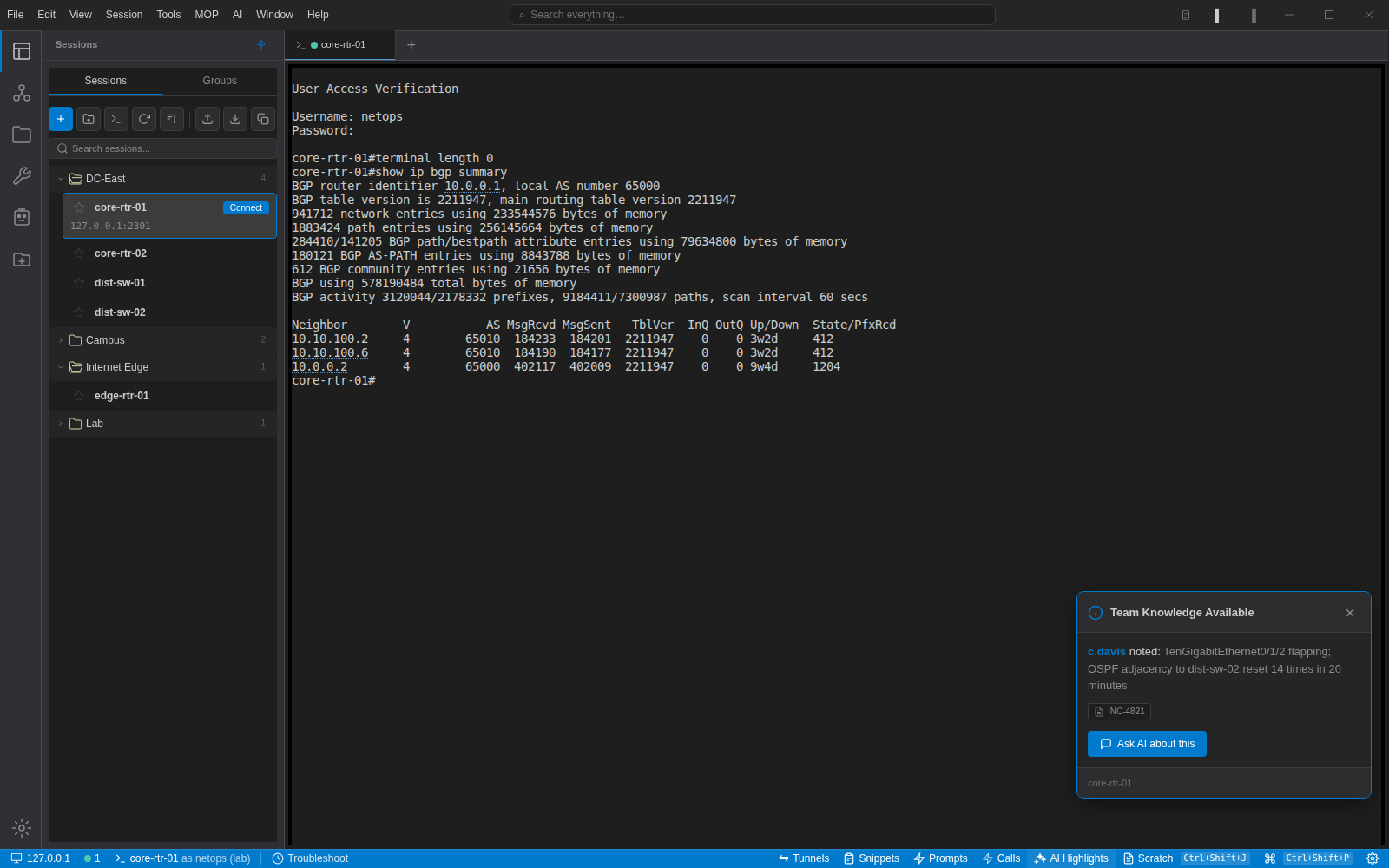
A startup crash that never reproduced on the machine that wrote the code. What happened, how schema files and migrations fight each other, and the small change that made the class of bug impossible.
Read more →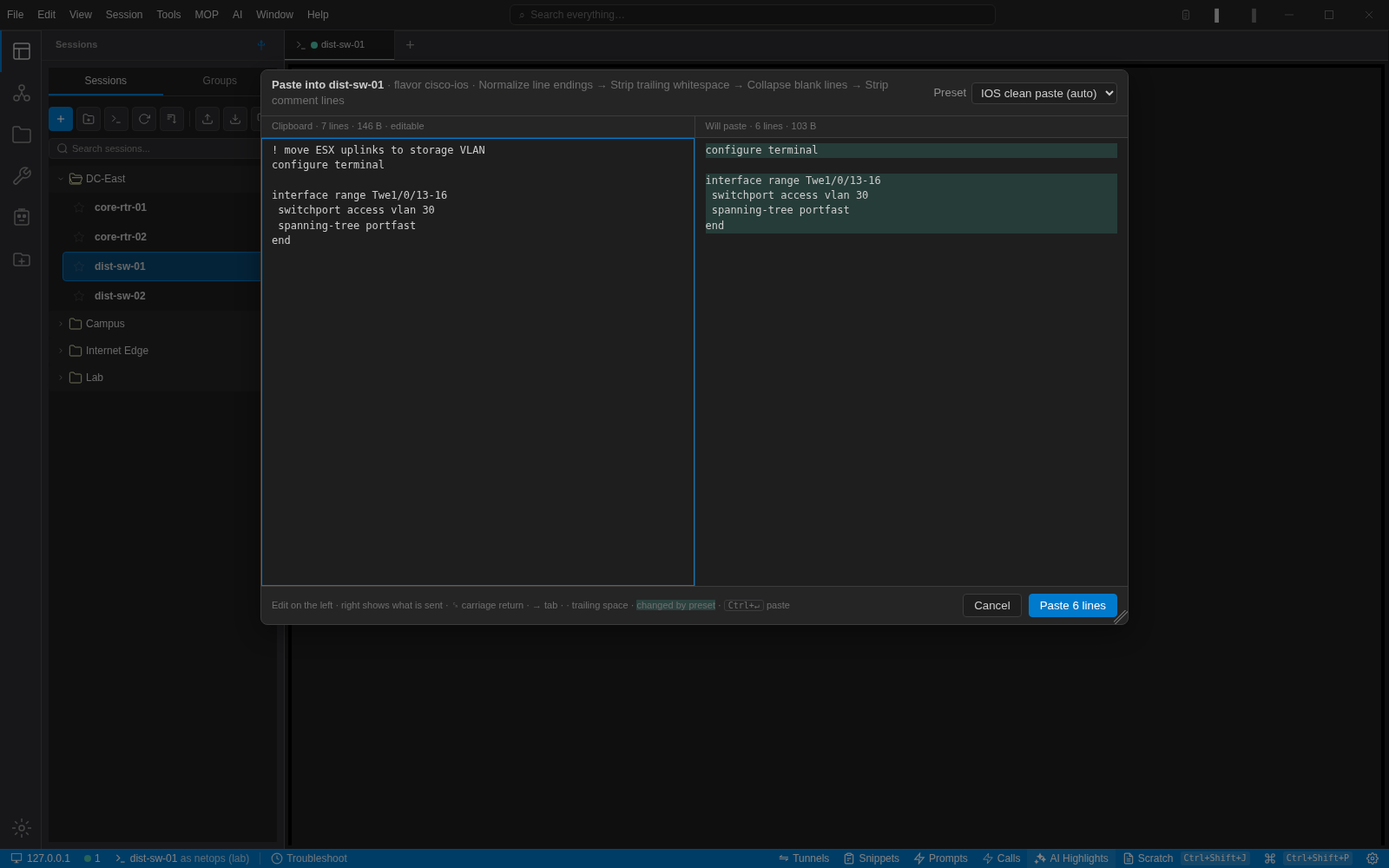
SecureCRT users asked for the paste confirmation they were used to. Here is what we built, why the chords ended up the way they did, and what the clipboard history keeps and does not keep.
Read more →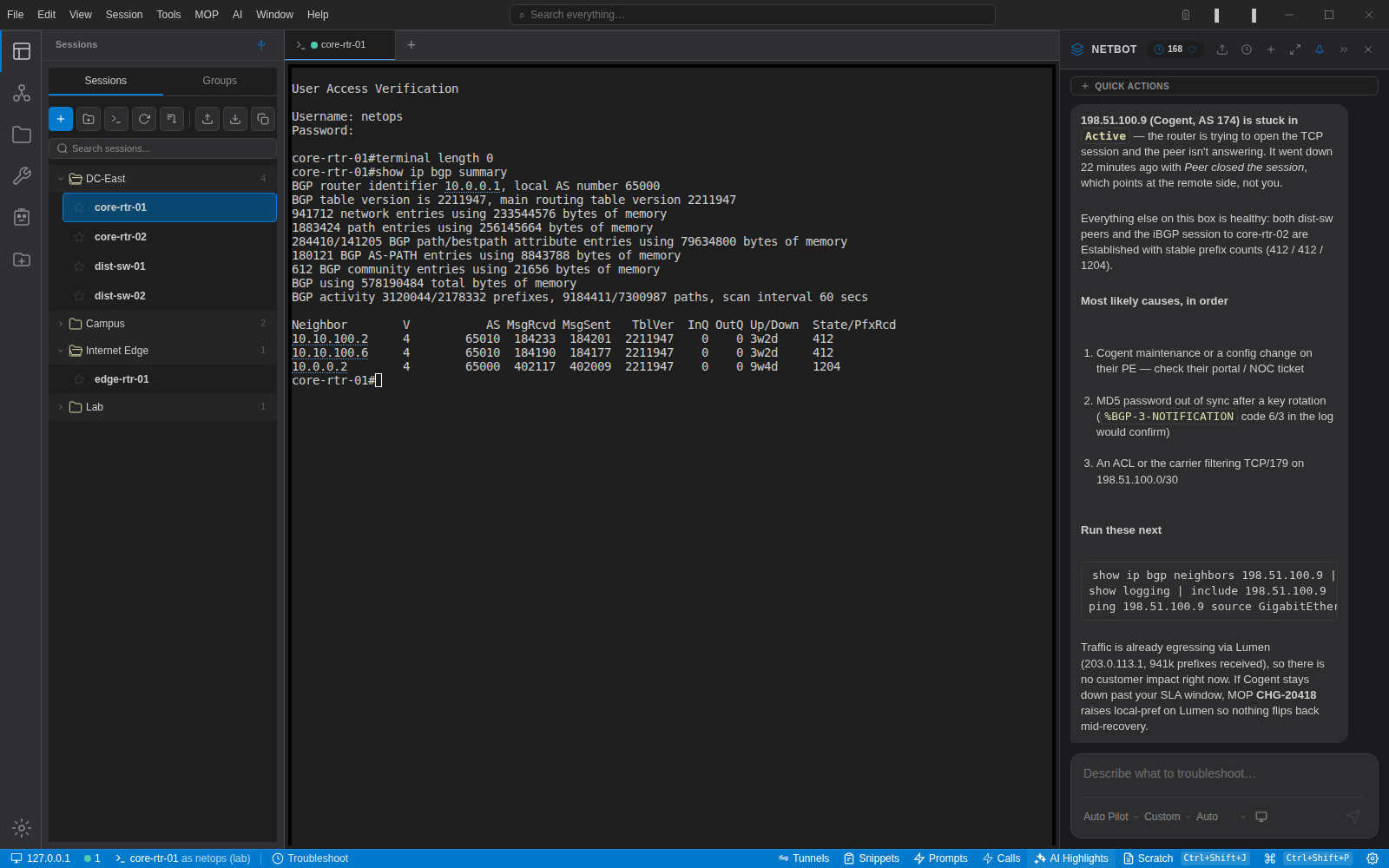
The assistant is only as good as the context it is handed. A walk through how NetStacks assembles that context, what is redacted, what is fixed, and which prompts you can change.
Read more →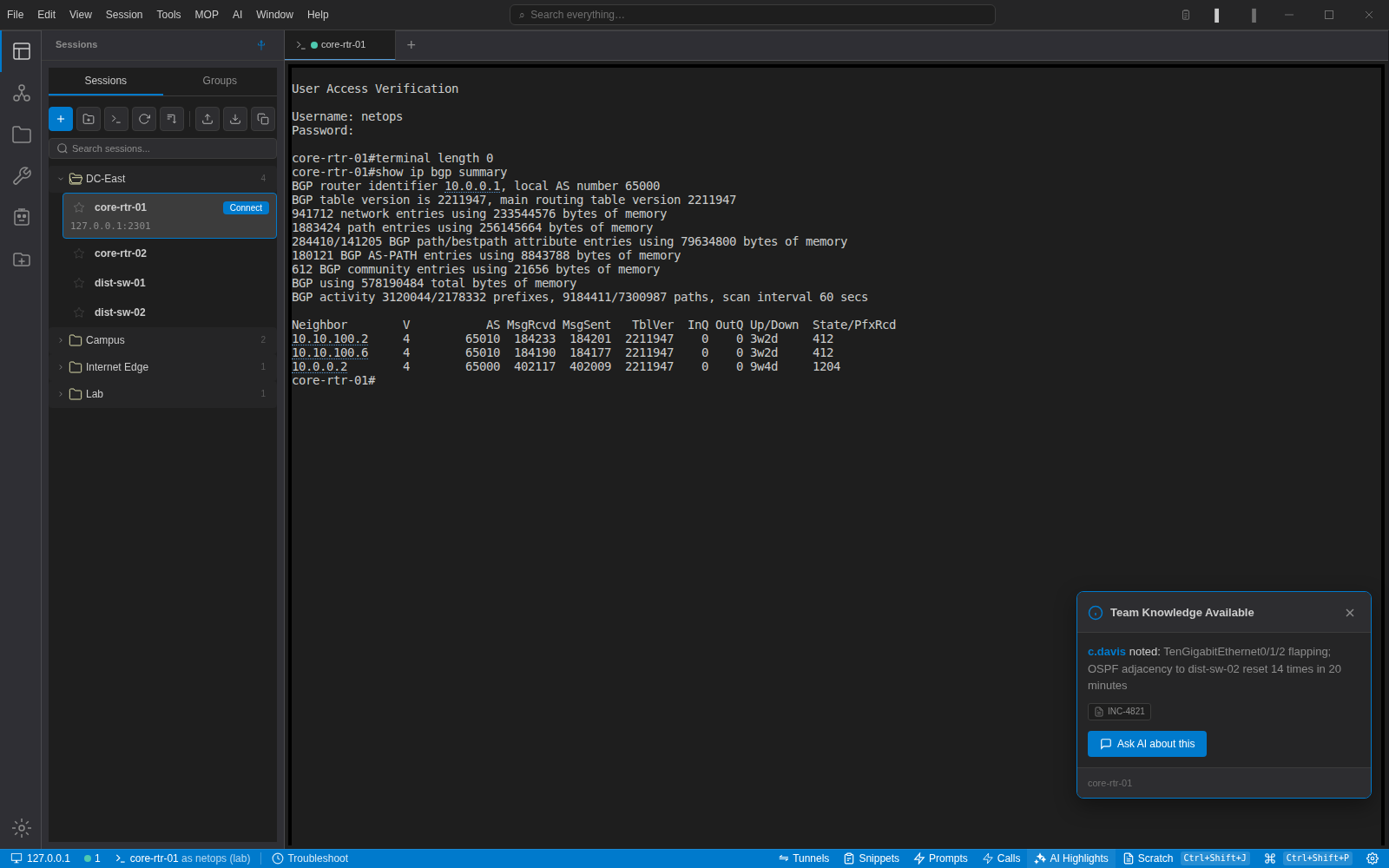
Post-mortems are written and forgotten. Attaching the short version to the device, and showing it the moment someone connects, is the smallest change that made our own troubleshooting faster.
Read more →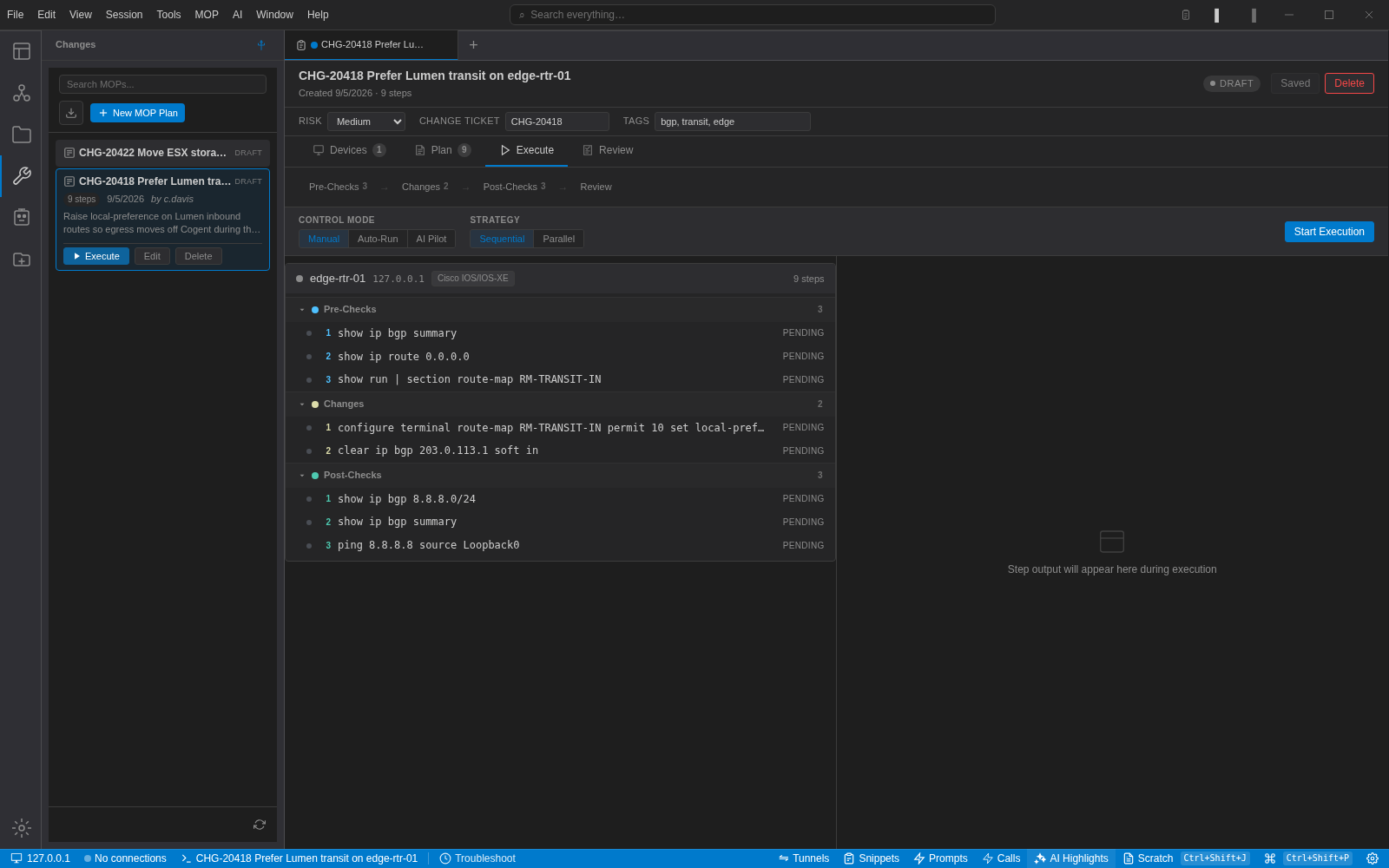
A method of procedure is only useful if it stops when reality disagrees with the plan. What a typed step list gives you that a Word document does not, with a worked example from a transit failover.
Read more →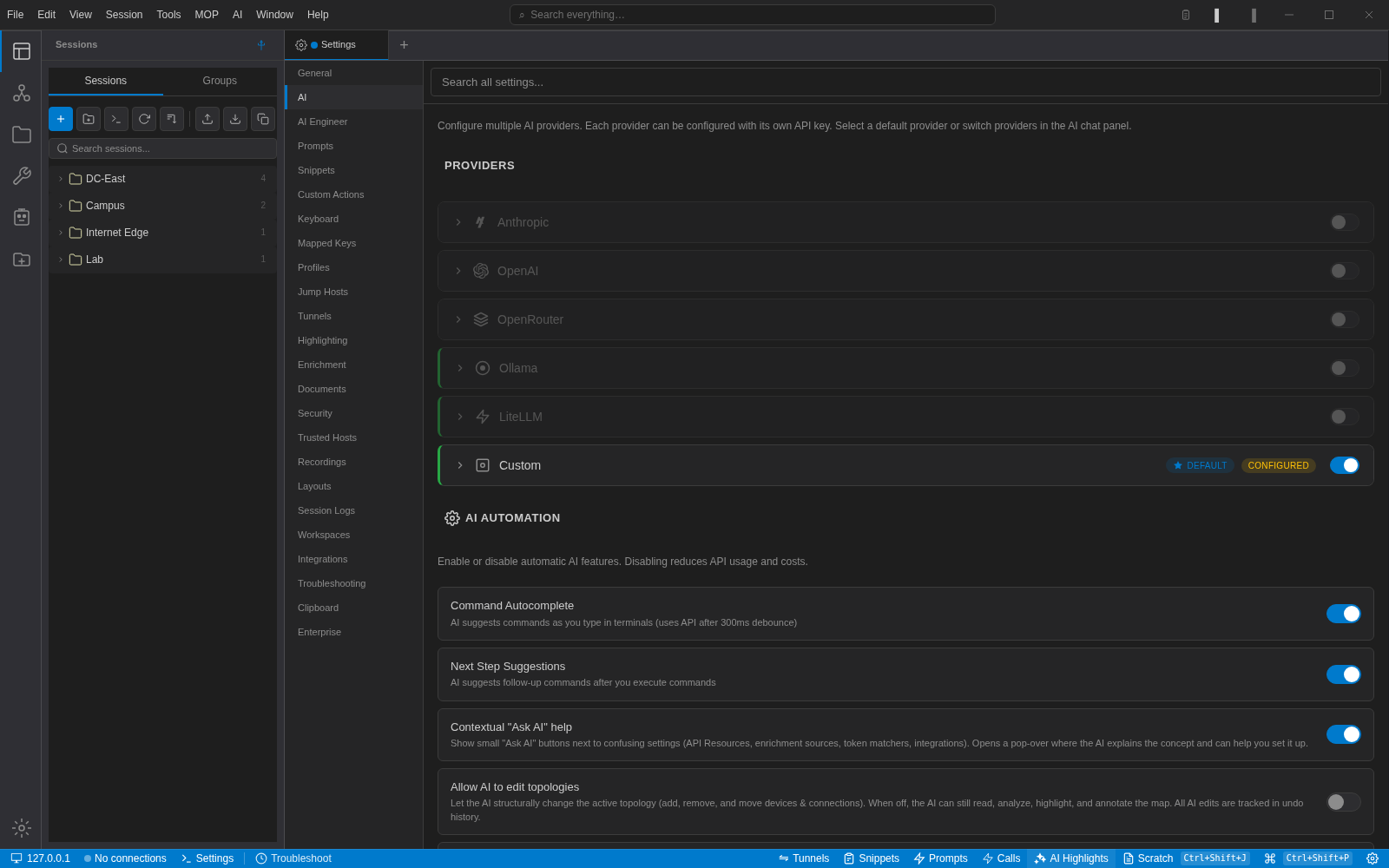
No account, no relay, no data leaving the building. How to point NetStacks at a local model, what works well, what does not, and how to check what the request contains.
Read more →The AI in NetStacks reads this table well, but you should read it better. A column-by-column guide to the one command every BGP engineer runs first, with the patterns that tell you what to do next.
Read more →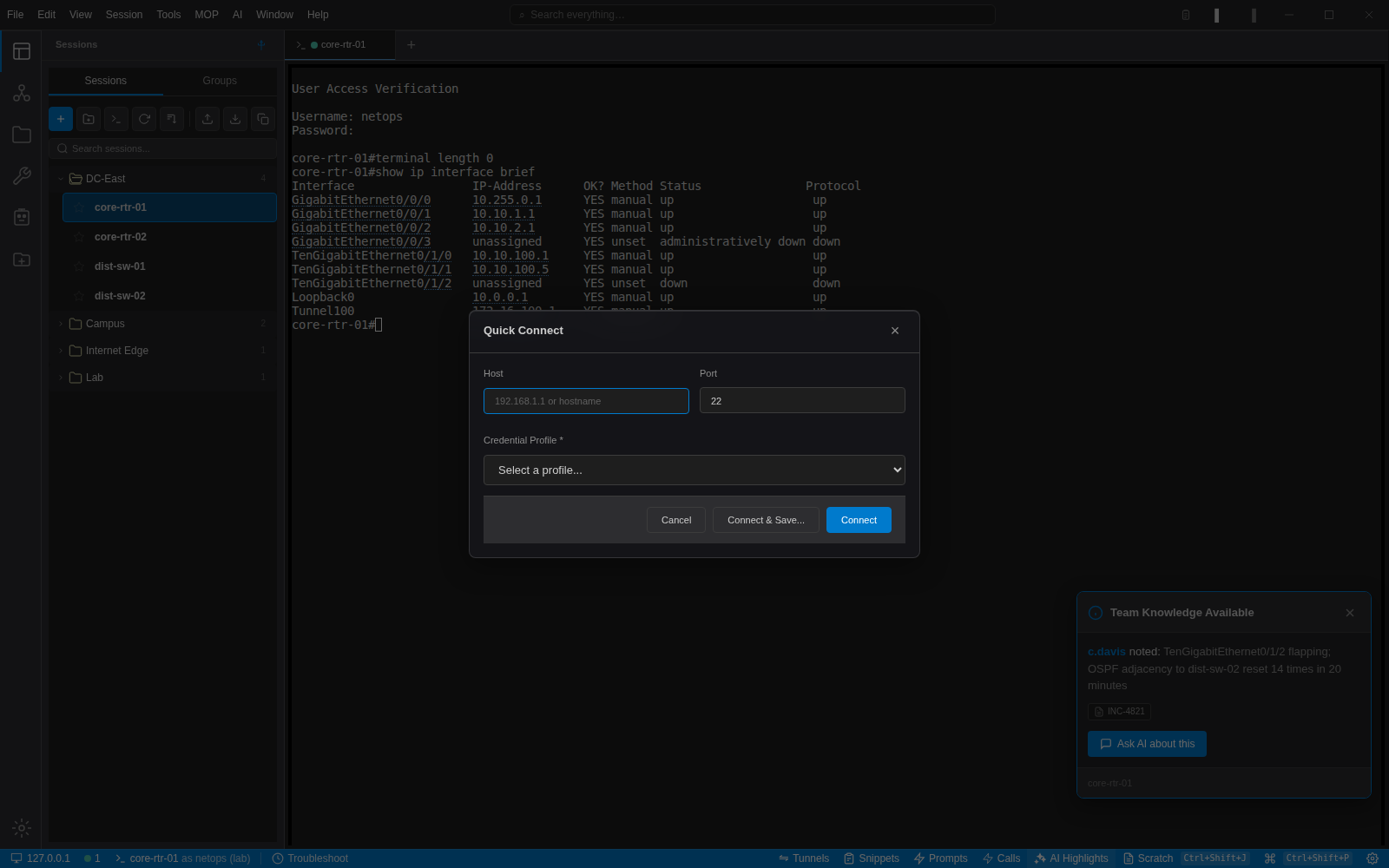
Nobody should run Telnet across a network. Plenty of us still have to talk to it. How NetStacks handles Telnet, console servers and legacy SSH without making the modern path worse.
Read more →The LLM hype promises autonomous networks that self-heal. The reality is messier. What network engineers actually need isn't autonomous AI — it's an AI that thinks with you when things break.
Read more →Post-mortems love MOPs because they're supposed to prevent exactly the disasters that keep happening. The problem isn't the concept — it's that most MOP tooling makes them painful enough that teams skip them.
Read more →NetBox adoption is near-universal, but most teams use it as a CMDB with a pretty UI. The gap between having NetBox and actually using it as a source of truth is smaller than you think — if you close one specific gap.
Read more →Teams invest in Ansible, Python, NetBox, Windmill. But the terminal — where 80% of network engineering actually happens — is still PuTTY from 2019. Here's why that matters more than you think.
Read more →Individual SSH keys are manageable. Individual SSH keys across 200 engineers, 5000 devices, and 17 automation platforms are not. SSH certificates aren't a nice-to-have anymore — they're the only way to scale access control.
Read more →